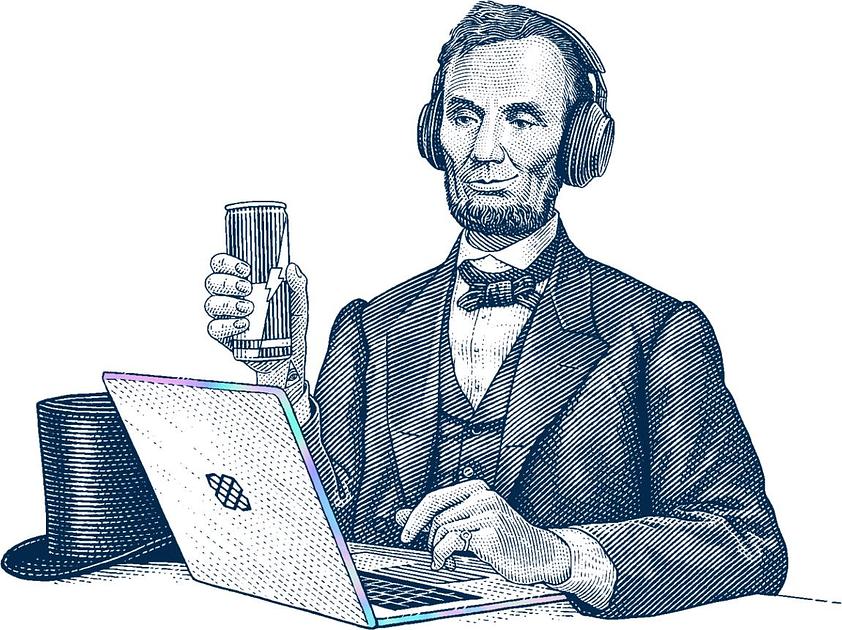
The “Manchurian Candidate” in Your Zoom Lobby: How AI Is Changing Political & PR Hiring
In retrospect, the interview had gone too well.
The candidate’s answers on crisis management were polished, perfectly structured, and delivered with the confidence of a seasoned press secretary. Eager to staff a high-stakes legislative campaign, the firm made the hire.
Three weeks later, the VP knew something was wrong.
When a major client was hit with a sudden bad-news cycle, the new hire froze. He struggled to draft a basic response statement, hesitated on simple decisions, and lacked the quick-thinking instincts he had demonstrated so effortlessly during the virtual interview.
The uncomfortable realization: the candidate had been using ChatGPT as a real-time interview assistant.
The VP, who asked to remain anonymous, described it as an embarrassing lesson in the new reality of hiring: it is now possible to create the appearance of expertise without necessarily having the experience to back it up.
Welcome to the era of the AI-assisted candidate.
After more than 30 years recruiting political and public affairs professionals, we've learned that the strongest candidates are rarely the ones with the most polished answers. They are the ones who can walk into uncertainty, absorb incomplete information, understand the stakes, and make smart decisions when there is no perfect playbook.
That is what makes AI such a disruptive force in political hiring. It can help candidates prepare, organize their thoughts, and communicate more effectively. But it can also make it harder for employers to determine whether they are evaluating the candidate—or the candidate’s ability to prompt.
In politics, campaigns, and public relations, that distinction matters.
The Ultimate Sin in Communications: Faking “Quick Feet”
In politics and PR, your value is your ability to think on your feet.
When a reporter calls demanding a quote in five minutes, there is no time to craft the perfect prompt. When a candidate faces an unexpected attack, there is no AI assistant standing next to the podium.
Judgment, timing, and instincts matter.
Yet hiring managers are increasingly encountering candidates who appear exceptional on paper—and even better on Zoom—but struggle when the pressure becomes real.
The warning signs often become obvious in hindsight:
The “Tidy Three-Pointer”
Perfectly structured answers to complicated political questions. Every response has a beginning, middle, and end—even when the situation demands nuance, creativity, or a little improvisation.
The Web-Scraper Echo
Answers that sound suspiciously similar to messaging from your campaign, agency, or organization’s website, complete with the same buzzwords and positioning language.
The “Teleprompter” Gaze
A subtle delay before responding. Eyes moving across the screen. Answers that sound less like a conversation and more like someone reading a prepared statement.
AI has quickly become part of the job-search process. Candidates use it to improve résumés, prepare interview responses, and research organizations. Those uses are not only acceptable—they are becoming part of modern career management.
The problem comes when AI crosses the line from preparation tool to performance substitute.
A candidate may appear capable of doing the job. But when the campaign gets chaotic, the client crisis hits, or the reporter calls unexpectedly, the gap between appearance and ability becomes impossible to ignore.
Why the Take-Home Writing Test Is Broken
For years, hiring political communicators followed a familiar playbook:
- Review the résumé and portfolio.
- Send a take-home writing assignment.
- Interview the strongest candidates.
That process worked because the writing sample reflected the candidate’s actual ability.
AI changed that equation.
Today, almost any candidate can produce a polished press release, messaging memo, or crisis statement with the help of ChatGPT or Claude. The result is a hiring funnel filled with candidates who look excellent on paper but may not have the judgment, creativity, or speed required in the real world.
A regrettable hire in politics is not just expensive. It can damage a candidate’s reputation, weaken message discipline, or jeopardize an important client relationship.
The challenge is not figuring out how to eliminate AI from hiring. That is impossible.
The challenge is figuring out how to evaluate the human skills that AI cannot easily replicate.
How to AI-Proof Political & PR Hiring
The answer is not to ban AI. The best professionals will know how to use these tools effectively.
Instead, hiring processes need to measure what still separates great communicators from average ones: judgment, experience, creativity, and decision-making under pressure.
1. Replace the Take-Home With Live Exercises
Stop relying exclusively on overnight writing assignments.
Instead, conduct live simulations:
- Draft a rapid-response statement in 15 minutes.
- Develop talking points after a hypothetical attack.
- Write a reporter pitch while explaining your strategy.
The goal is not perfect prose. The goal is seeing how someone thinks.
2. Test Authenticity, Not Just Knowledge
Introduce unexpected questions during interviews.
Ask about:
- A difficult moment on a campaign.
- A mistake they made and what they learned.
- A tough client situation.
- A time they had to make a decision with incomplete information.
Real experience has texture. AI-generated answers often sound polished but lack specificity.
3. Bring Back More Human Interaction
Virtual interviews are convenient, but they also make it easier to hide behind technology.
For local hires, consider bringing back more in-person conversations: the office visit, the coffee meeting, the informal discussion.
Communications is ultimately a relationship business. Chemistry, judgment, and trust still matter.
4. Do Deeper Reference Checks
In politics and public affairs, reputations travel.
Don’t only call the references provided by the candidate. Ask around. Someone in your network probably knows someone who has worked with them.
The best predictor of future performance is often past behavior.
The Bottom Line
Politics and public relations are industries built on persuasion, messaging, and performance.
But there is a difference between preparing effectively and outsourcing your professional identity.
AI will make candidates better. It will make recruiters more efficient. It will reshape how campaigns and firms operate.
The winners will not be the organizations that reject AI. They will be the ones that understand where technology helps—and where human judgment remains irreplaceable.
Because when the crisis hits, the reporter calls, or election night arrives, ChatGPT is not going to pick up the phone, read the room, or make the tough call.
People still have to do that.